How Paris Antoinette centralized the management of its 50 cultural visits with Notion
From Excel to instant view: complete centralization of activity in a structured Notion CRM.
Paris Antoinette organizes cultural visits in the Parisian museums for school groups and non-school groups. The company was managing its activity with scattered Excel files which prevented it from having an overall view. Thanks to a centralized Notion CRM, Paris Antoinette regained an instant view of its 50 visits and saved operational time.
Context & Challenge
Paris Antoinette offers guided cultural tours in the Parisian museums. The main activity covers school outings from kindergarten to high school, thematic projects over several days, and classroom activities. The company offers nearly 50 visits to museums, monuments, and themed circuits on history, street art, mythology, and the environment. These services are also aimed at families, teenagers, adults, and private groups. The manager was handling the entire activity alone but faced a major organizational challenge. Dispersed system: scattered documents, multiple calendars, data spread across different Excel files. This manual management prevented him from having an overall view of his activity. He wasted time navigating between his files without being able to quickly visualize the status of his visits. The lack of structured organization diverted the manager from his high-value-added missions: developing the business and supporting his clients.
Method
After a comprehensive audit of Paris Antoinette's existing processes, we developed a structured approach in several phases. We first analyzed the current organization of data and identified critical information flows. This analysis allowed us to design an optimal data architecture in Notion with interconnected bases: visits, clients, guides, and calendar. We then designed an intuitive user interface organized into several views, including a central dashboard providing an overall view of the activity. The approach favored ease of use while maintaining complete traceability of operations.
Deployed Systems
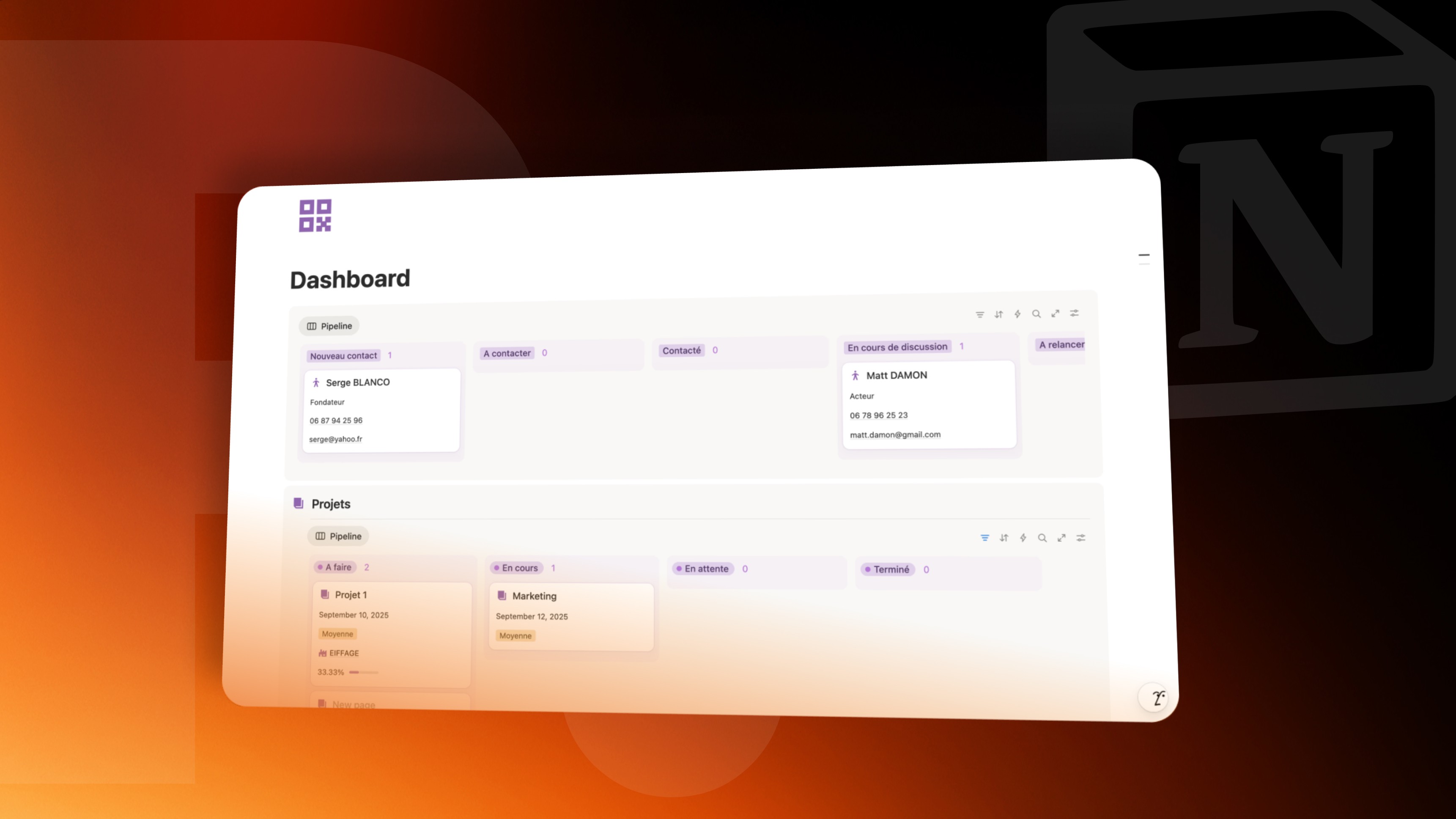
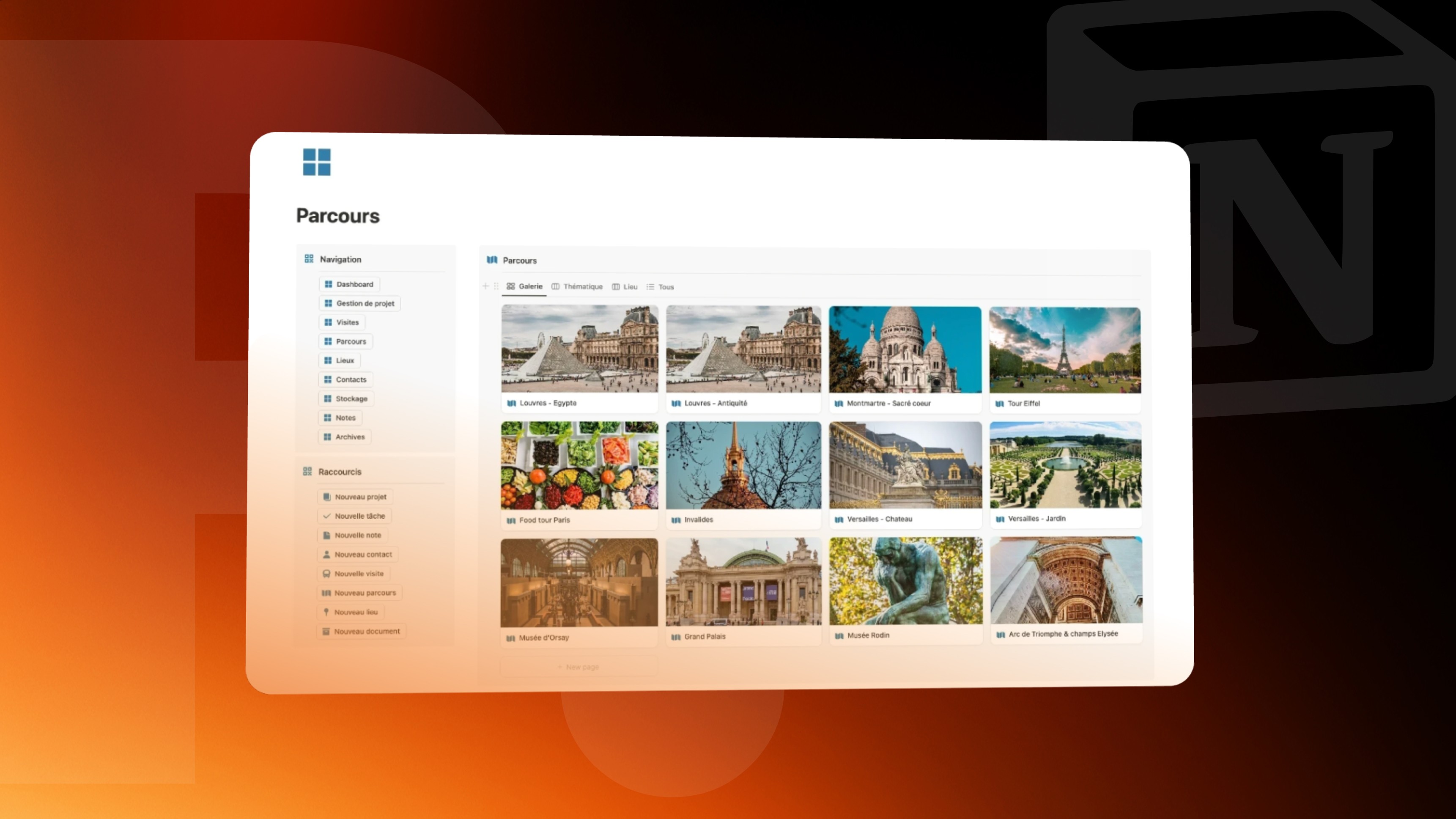
The deployed technical architecture is based on a centralized Notion CRM that structures all the activity. We created an ecosystem of interconnected bases that centralizes the entirety of the activity: venues, routes, visits, contacts, projects, and tasks. The architecture is based on a simple business logic: each venue contains several routes, and each visit corresponds to a route undertaken at a given time. This interconnection eliminates duplicates and guarantees data consistency. The system naturally structures the workflow: from managing cultural sites to following up on client projects, including scheduling visits and capitalizing on contextual notes. Optimized navigation and visual indicators The system integrates filtered views allowing only the essentials to be seen according to the context. No more need to navigate through endless tables. We deployed visual indicators in the form of checkboxes to instantly check if a visit is ready. A simple glance is enough to identify the missing elements. Integrated practical features The CRM includes simple financial calculations to facilitate quotations and billing. The quick action buttons provide direct access to the most commonly used functions. The user-friendly navigation ensures immediate handling. Every element is designed to optimize the daily workflow of the manager.

Impact Business
The centralization implemented has generated immediate operational benefits for Paris Antoinette. Instant visibility over the entire activity replaces the search in scattered files. Time-saving operational gains through better visualization of schedules and visit statuses. An evolving technical base allowing the addition of new features according to future needs. The system completely eliminates the risks of information loss and guarantees complete traceability with a comprehensive history in Notion. The centralized solution allows the manager to focus on the development of their cultural visit offerings rather than on repetitive administrative tasks.